


Providing Clean Drinking Water to the People of Mallur Panchayat
Funding Agency: Lien Environmental Fellowship (Through Nanyang Technological University).
Location: Mallur Panchayat, Karnataka.
Coordinators: Prof. Ligy Philip and Prof. (Retd.) B. S. Murty
Access to safe and reliable drinking water remains a major challenge in many rural communities, where groundwater is often the primary source of supply but may be affected by chemical and microbiological contamination. AquaMAP: Centre for Water Management and Policy at IIT Madras, with support from the Lien Environmental Fellowship administered by through Nanyang Technological University, is implementing a project to improve access to safe drinking water in Ankathatti , Kachahalli villages and Mallur villages of Mallur Gram Panchayat, Karnataka. The project commenced in 2026 and is scheduled for completion by March 2027.
Mallur Gram Panchayat comprises four villages—Mallur, Muthur, Kachahalli and Ankathatti—and currently depends predominantly on deep borewells for drinking-water supply. Baseline investigations undertaken by the AquaMAP team identified significant organic, nutrient and bacteriological contamination in drinking-water sources and household samples. With approximately 5,000 people expected to benefit, the project aims to provide a reliable, safe and technology-enabled drinking-water supply system.
The intervention combines water treatment, automated disinfection, real-time monitoring and community-level capacity building. Treatment systems incorporating microfiltration, activated carbon adsorption, ultrafiltration and UV disinfection will be installed at key locations.
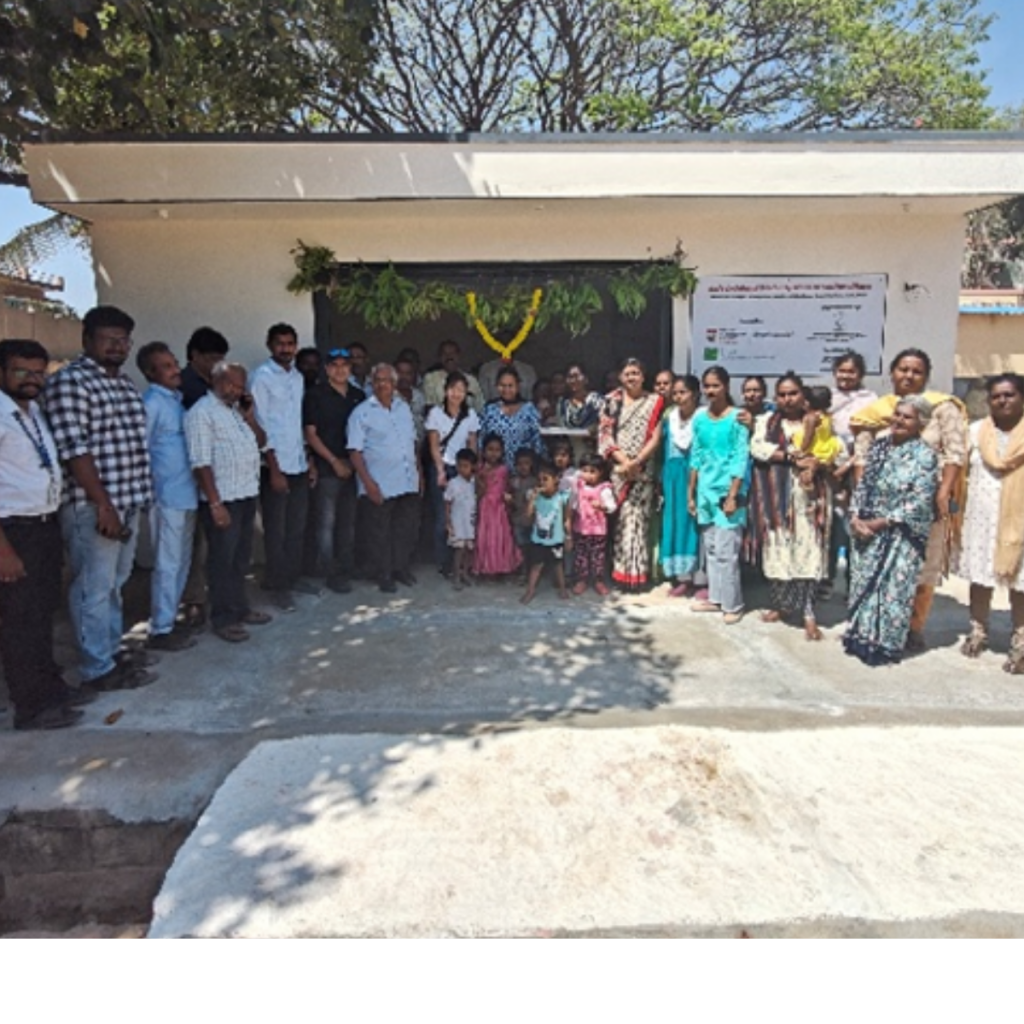
Automatic chlorinators will improve disinfection at overhead tanks, while sensors will continuously monitor parameters such as pH, turbidity, total dissolved solids and residual chlorine. Flow and water-level sensors, supported by IoT-enabled communication systems, will facilitate monitoring of both water quality and quantity and provide information on water supply through mobile applications.
Dedicated treatment units will also be provided for schools and Anganwadis. Village-level workers will be trained to conduct water-quality checks using locally developed test kits, strengthening community participation and early detection of contamination.
The project seeks not only to improve public health and water security in Mallur Panchayat but also to develop a scalable model for safe rural drinking-water management that can be replicated by other communities and government agencies across India.